


AI is automating the back end of university learning systems. The administrators who kept those systems running face a choice between obsolescence and reinvention.
Denise Washington spent nine years as the LMS administrator at a mid-size public university. She managed the help desk tickets, tagged course content, maintained the analytics dashboards, and was the person faculty called when something broke at 11 PM before an exam. She was good at it. Then the university deployed an AI-integrated learning platform that handled ticket routing automatically, tagged content using natural language processing, and generated analytics dashboards that updated in real time. Denise’s inbox, which once held 60 to 80 tickets a day, dropped to 12. Her job title did not change, but her job had.
The Efficiency Case
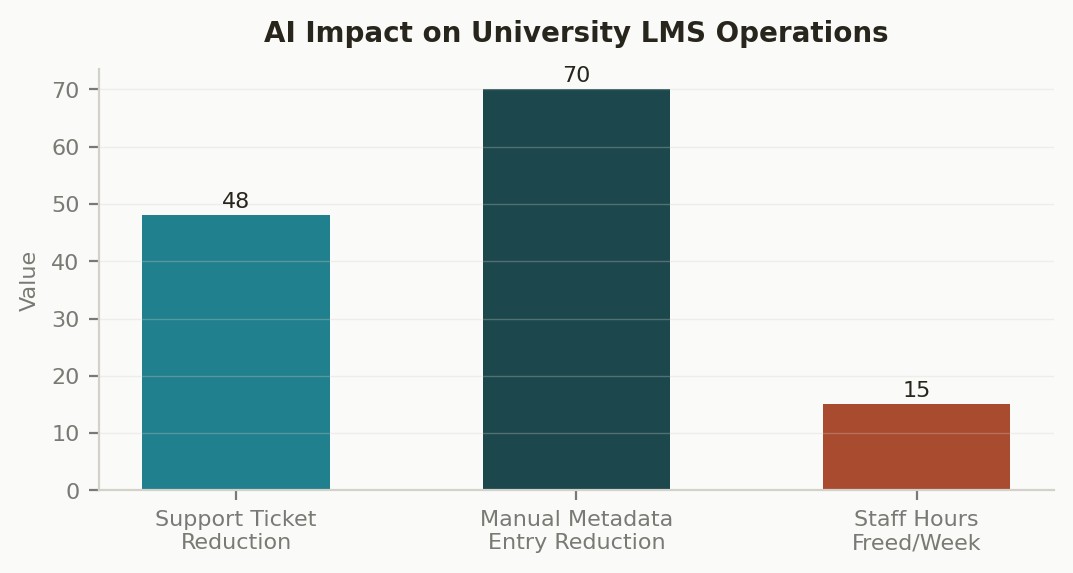
Educause’s 2025 Horizon Report found that institutions deploying AI across their learning management infrastructure saw a 40 to 55 percent reduction in IT support tickets related to LMS operations. 1EdTech Consortium’s interoperability research documented that AI-driven content tagging reduced manual metadata entry by 70 percent, freeing an average of 15 hours per week per staff member. ASU+GSV Summit research estimated that the EdTech AI market reached $8.2 billion in 2025, with institutional AI infrastructure growing faster than any other segment.
The numbers make the case clearly: AI is taking over the operational plumbing of university learning systems. The tasks that consumed most of Denise’s time—ticket triage, content organization, report generation—are precisely the kind of repetitive, pattern-based work that AI handles well.
The Identity Question
But Denise’s experience raises a question that the efficiency metrics do not capture: what happens to the professional identity of people whose competence was built on tasks that machines now do better? LMS administrators are not a glamorous workforce, but they are a critical one—the people who ensured that online learning actually worked during the pandemic emergency pivot and in the years since. Telling them their skills are obsolete is factually incomplete and emotionally destructive.
The reality is that their skills are foundational. They understand how faculty teach, how students learn, and how technology shapes both. The question is whether institutions will invest in transitioning them from operational roles to strategic ones, or simply let attrition do the work.
The Reskilling Path
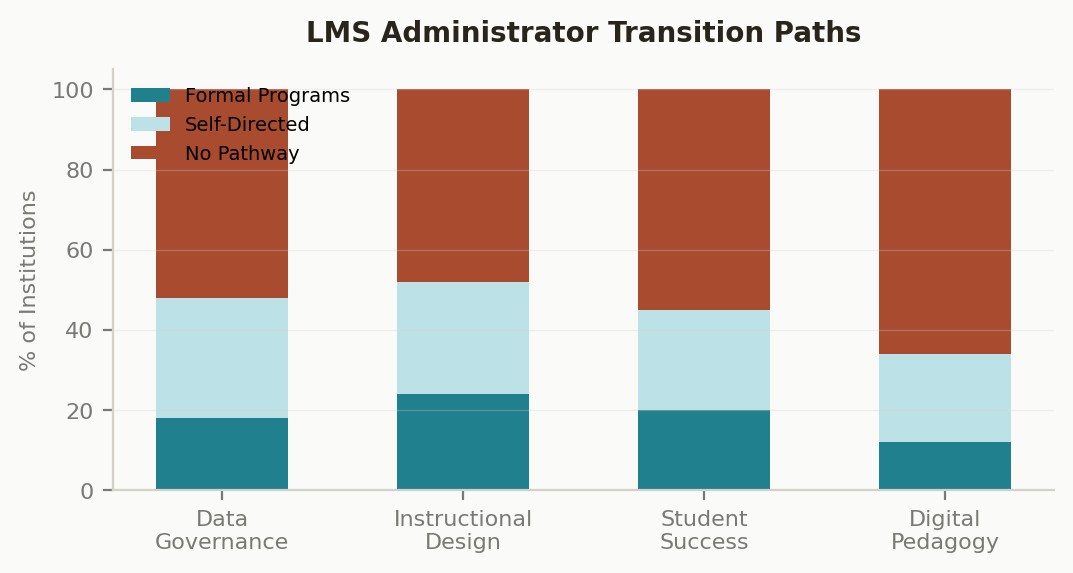
Educause’s workforce analysis identified four natural transition paths for LMS administrators: data governance specialists who ensure AI systems handle student data ethically and in compliance with FERPA, instructional design consultants who help faculty integrate AI tools pedagogically, student success analysts who use AI-generated data to intervene proactively for at-risk students, and digital pedagogy strategists who shape institutional policy on AI in teaching and learning. These roles require new skills, but they build on existing knowledge. They treat experience as a bridge, not a burden.
What This Means for You
If you are an LMS administrator:
• Start building skills in data governance, instructional design, and student analytics now. Your institutional knowledge is your greatest asset—position it as the foundation for a strategic role, not the remnant of an operational one.
If you are a university CIO:
• Fund transition programs for IT staff displaced by AI automation. The cost of structured reskilling is a fraction of the cost of losing institutional knowledge and rebuilding from scratch.
If you are a faculty member:
• Recognize that the people who managed your LMS for years are the same people best positioned to help you integrate AI thoughtfully into your teaching. Advocate for their transition, not their elimination.
REFERENCES
1. Educause, "2025 Horizon Report" — https://www.educause.edu/horizon-report
2. 1EdTech Consortium, "AI Standards and Interoperability" — https://www.imsglobal.org/activity/artificial-intelligence
3. ASU+GSV Summit, "EdTech Market Insights 2025" — https://www.asugsvsummit.com/insights
Comments (0)
Join the conversation!