

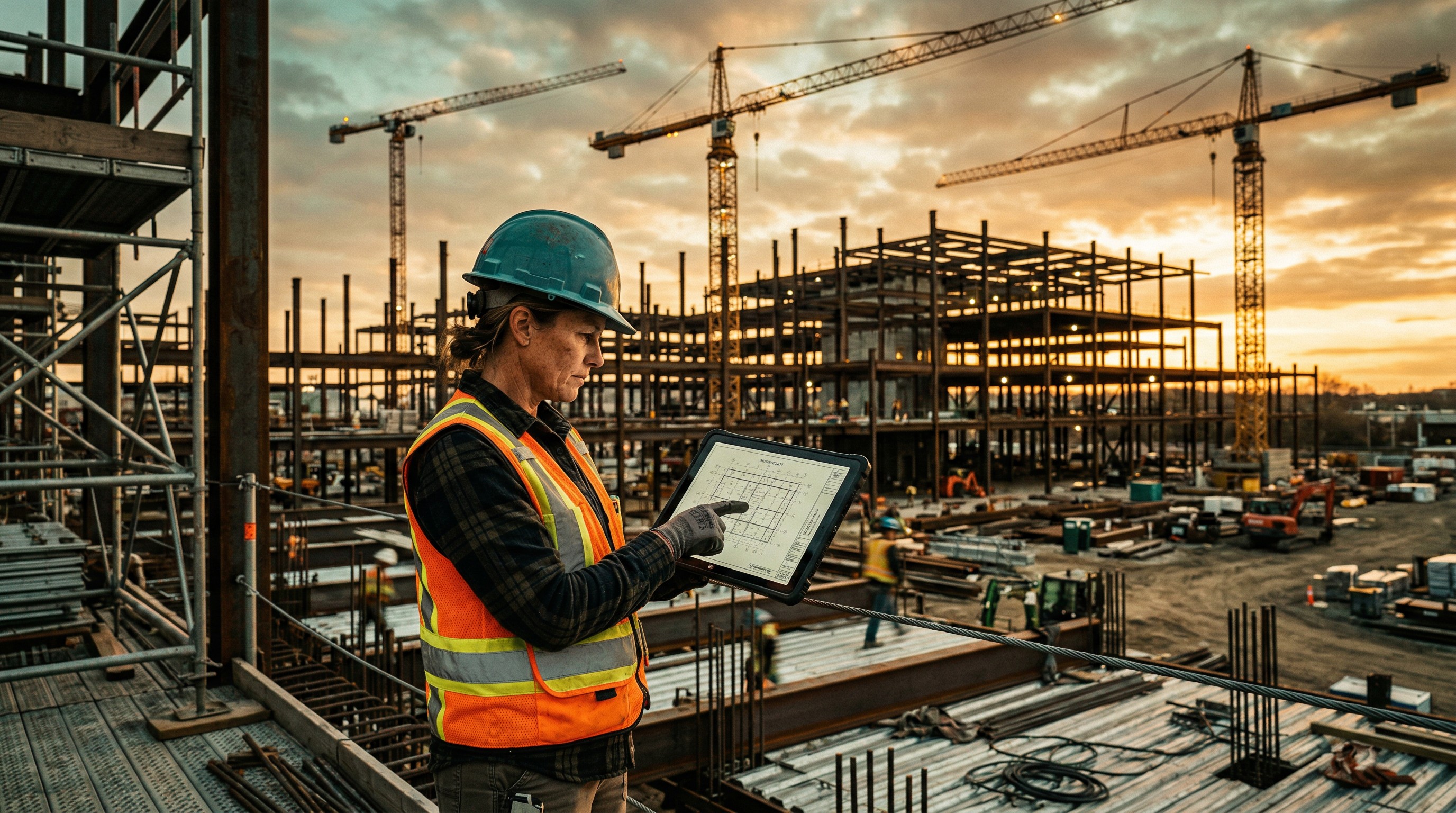
AI planning tools are optimizing construction schedules and costs. But the crews on the ground are adapting to timelines that optimize for algorithms, not for the realities of a job site.
Miguel Reyes has managed commercial construction projects for sixteen years. He has learned to read a site the way a pilot reads weather—sensing delays in concrete deliveries, knowing which subcontractor crews work well together, and understanding that a three-day rain forecast means rescheduling steel erection, not just noting it on a chart. Last year, his firm adopted a generative AI planning system that produces optimized schedules, cost projections, and material orders. The system is impressive. It is also, in Miguel’s experience, occasionally ignorant of everything that matters on the ground.
The Optimization Promise
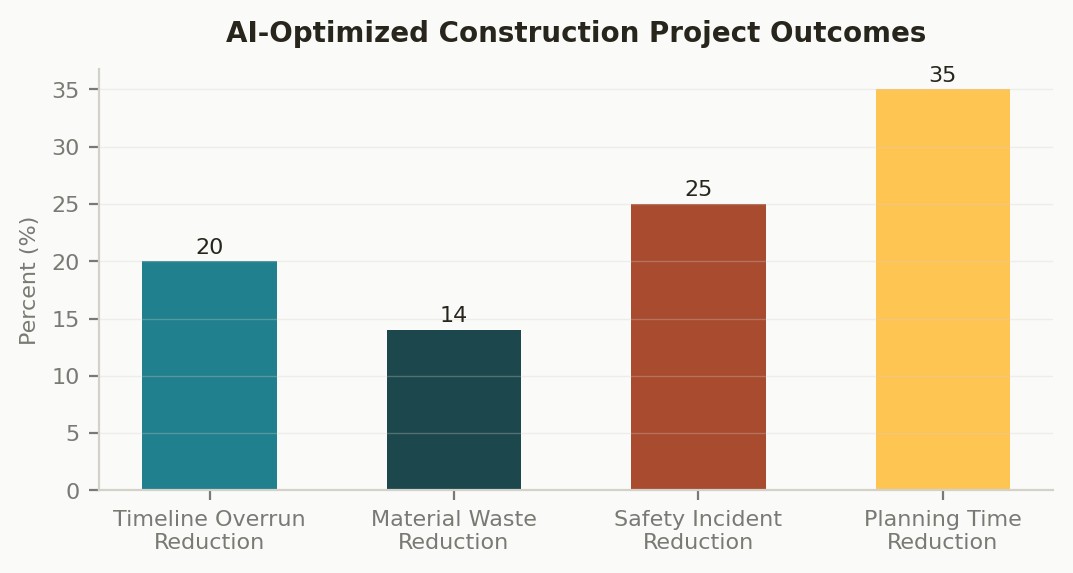
Generative AI in construction planning is producing measurable results. BuiltWorlds’ 2025 analysis of construction technology deployments found that AI-optimized project schedules reduce timeline overruns by 15 to 25 percent and cut material waste by 10 to 18 percent. Engineering News-Record’s coverage of AI in large-scale projects documented safety improvements of 20 to 30 percent at sites using AI-driven risk assessment tools, measured by recordable incident rates.
JLL’s technology research notes that digital twin and generative design applications in commercial real estate have reduced preconstruction planning time by 30 to 40 percent. CBRE’s analysis projects that AI-assisted construction will grow into a $4.5 billion market by 2027, driven by labor shortages and cost pressures that make optimization not just attractive but necessary.
The Ground-Level Reality
But optimization algorithms know costs. They do not know concrete. Miguel’s AI planner once scheduled a foundation pour during a period when soil moisture levels made it inadvisable—something any experienced site manager would have flagged immediately. The system had access to weather data but not to the kind of tacit knowledge that comes from sixteen years of watching how clay behaves after three days of rain in the mid-Atlantic.
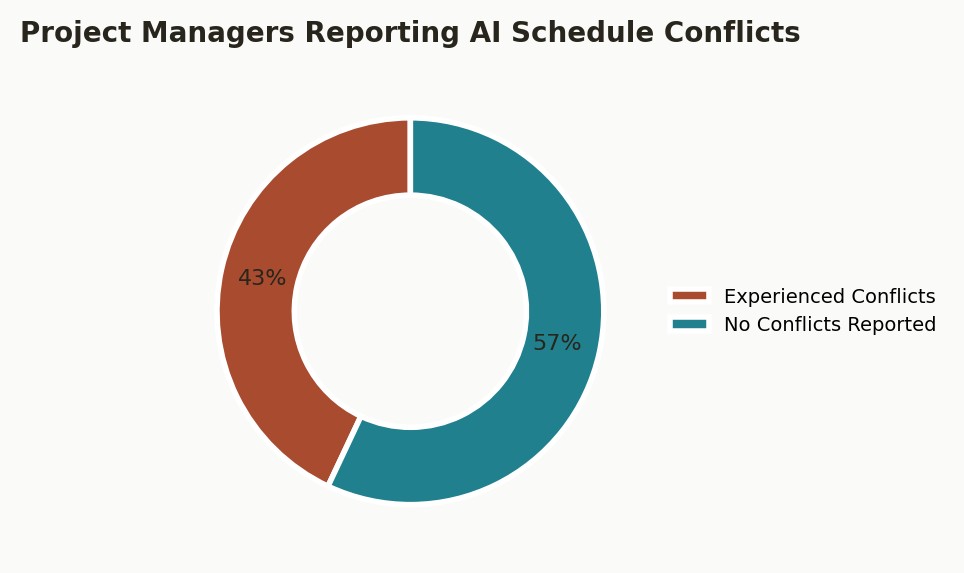
ENR’s reporting found that 43 percent of construction project managers using AI planning tools reported at least one instance where an algorithmically generated schedule conflicted with site conditions in ways that created safety concerns. The tools are getting better, but the gap between algorithmic optimization and ground-truth reality remains significant—and the workers on site are the ones who bridge it, often without credit or input into the system that shapes their daily work.
Participatory Design
The answer is not less AI. It is more participation. Construction firms that build worker feedback into their AI planning processes consistently outperform those that treat the algorithm as authoritative. This means creating formal channels for site managers and crew leaders to flag when AI schedules diverge from ground conditions, incorporating field-experience data into model training, and treating the AI planner as a first draft that human expertise revises—not a final plan that workers execute.
What This Means for You
If you are a site worker or crew leader:
• Your ground knowledge is irreplaceable. Document instances where AI plans conflict with site realities and bring them to project management.
If you are a construction executive:
• Mandate participatory review of every AI-generated schedule before execution. The safety and quality risks of blind algorithmic compliance far outweigh the time cost of a site-level review meeting.
If you are an AI vendor:
• Build field feedback loops into your product. The construction firms that will pay a premium are the ones whose workers trust the tool—and trust requires that the tool listens.
REFERENCES
1. BuiltWorlds, "Construction AI Case Studies 2025" — https://builtworlds.com/research/
2. Engineering News-Record, "AI in Construction Coverage" — https://www.enr.com/topics/3090-artificial-intelligence
3. JLL, "Technology and Real Estate Research" — https://www.jll.com/en/trends-and-insights/research
4. CBRE, "AI in Real Estate Report" — https://www.cbre.com/insights/articles/how-artificial-intelligence-is-changing-real-estate
Comments (0)
Join the conversation!