


AI bookkeeping tools are cutting turnaround times in half. But when the machine makes a mistake, the question of who is accountable exposes a trust gap that no algorithm can fill.
Elena Marsh runs a 15-person catering company in Portland. For eight years, she had the same accountant—a person who knew her business cycles, understood her tax situation, and picked up the phone when something did not look right. This January, her accounting firm announced it was deploying AI-powered bookkeeping and tax preparation tools. Her monthly close, which used to take five business days, now took one. The invoice was 30 percent cheaper. Everything was faster, more efficient, and slightly impersonal. Then the AI miscategorized $40,000 in equipment purchases as operating expenses, and Elena discovered that no human had reviewed her books before the quarterly filing.
Productivity on Paper
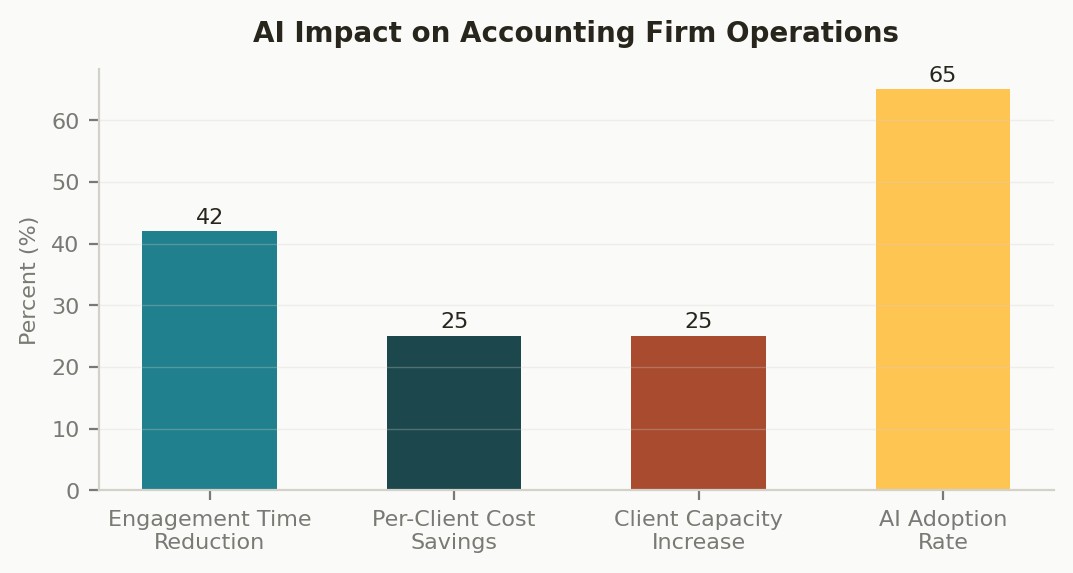
The productivity gains from AI in accounting are well documented. Accounting Today’s 2025 technology survey found that firms using AI-powered bookkeeping tools reduced engagement completion times by 35 to 50 percent and lowered per-client costs by 20 to 30 percent. Thomson Reuters’ AI in professional services report noted that early adopters saw a 25 percent increase in the number of clients their staff could serve without adding headcount.
SHRM’s analysis of AI adoption in professional services found that 65 percent of mid-size accounting firms had deployed or were piloting AI tools across tax preparation, bookkeeping, or audit support by early 2025. The technology is not on the horizon. It is in the office.
When Errors Meet Opacity
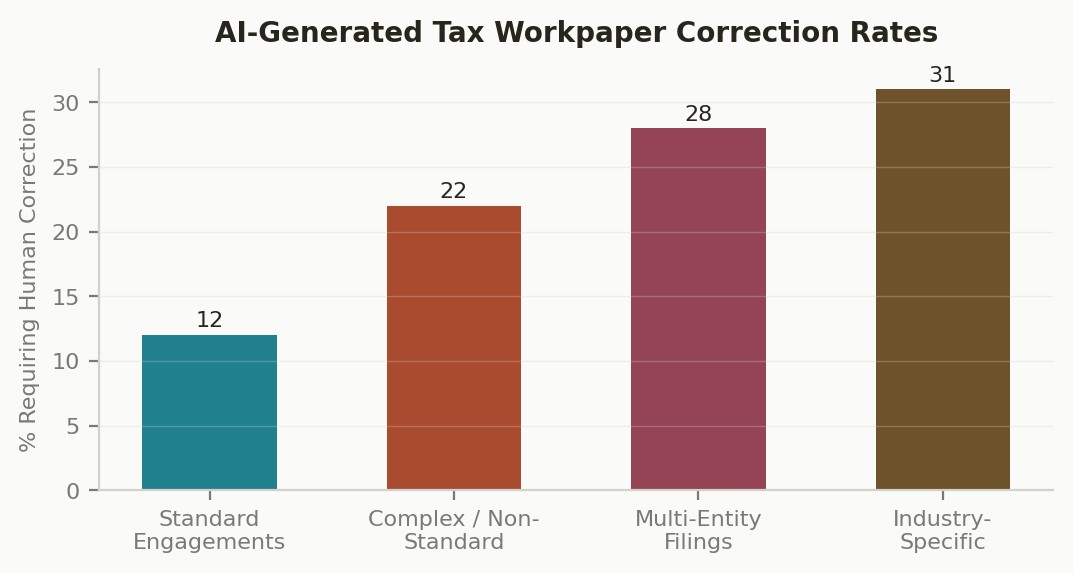
But the efficiency story has a reliability chapter that firms are less eager to discuss. AI bookkeeping tools operate on pattern recognition, and patterns break at the edges—unusual transactions, industry-specific accounting treatments, and the kind of contextual knowledge that an experienced accountant carries but rarely documents. Thomson Reuters found that AI-generated tax workpapers required human correction in 18 to 22 percent of engagements, a rate that firms described as “acceptable” but that clients experienced as alarming when they discovered it.
The accountability question is the crux. When a human accountant makes an error, there is a clear chain of responsibility: the preparer, the reviewer, the signing partner. When an AI makes an error that a human did not catch because the human assumed the AI was right, responsibility fragments. Elena’s $40,000 miscategorization was eventually corrected, but the experience left her with a question her firm could not answer clearly: who is responsible when the machine is wrong?
Preserving the Relationship
The firms navigating this transition most successfully are those that treat AI as a tool for freeing human capacity, not replacing human judgment. They are retraining bookkeepers into advisory roles—client-facing strategists who use AI-generated data to have more valuable conversations about cash flow, tax planning, and growth. They are communicating clearly to clients about what AI does and does not do. And they are maintaining mandatory human review checkpoints that no efficiency argument can override.
What This Means for You
If you are a small business owner:
• Ask your accounting firm directly: how is AI being used on my account, and who reviews the output? You are entitled to know whether a human has signed off on your financials.
If you are a firm partner:
• Disclose AI use to every client. Maintain human review on every engagement. The short-term efficiency gain of skipping review is not worth the long-term trust cost of a preventable error.
If you are an accounting professional:
• Lean into advisory skills. The firms that thrive will be those whose people can do what AI cannot: build relationships, understand context, and exercise judgment under ambiguity. That is your competitive advantage. Protect it.
REFERENCES
1. Accounting Today, "AI Technology Survey 2025" — https://www.accountingtoday.com/tag/artificial-intelligence
2. Thomson Reuters, "AI in Professional Services Report" — https://www.thomsonreuters.com/en/artificial-intelligence.html
3. SHRM, "AI in HR and Professional Services" — https://www.shrm.org/topics-tools/topics/artificial-intelligence
Comments (0)
Join the conversation!