


Generative AI is rewriting the economics of content production. The question of who gets credit, who gets paid, and who gets replaced is reshaping an industry built on human creativity.
Hana Kovacs has written promotional copy and short-form scripts for a mid-size media company for six years. She is good at it—fast, reliable, and fluent in the brand’s voice. Last fall, her creative director introduced a generative AI tool and asked the writing team to “co-create” with it for ad scripts, social media content, and promotional materials. Hana’s first reaction was curiosity. Her second, after watching the tool generate a passable 30-second script in eleven seconds, was something closer to dread. If the machine could produce a first draft in seconds, what exactly was her job?
The Productivity Uplift
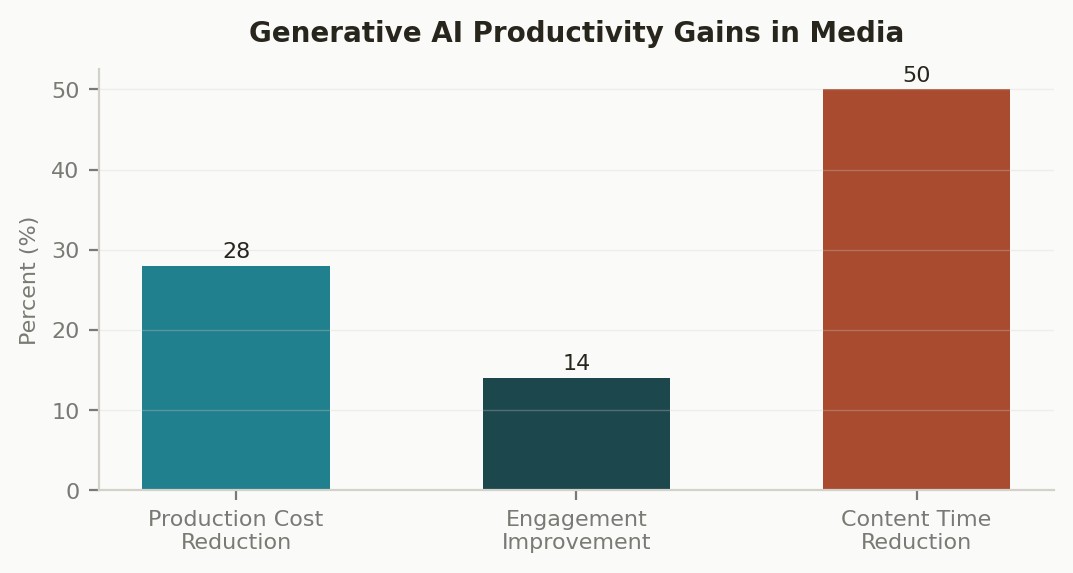
Generative AI in media and entertainment is delivering productivity gains that are difficult to dismiss. WARC’s 2025 marketing AI benchmarks found that ad campaigns using AI-generated creative elements saw a 20 to 35 percent reduction in production costs and a 10 to 18 percent improvement in audience engagement metrics. Digiday’s coverage of AI in media reported that publishers using generative tools for headlines, summaries, and promotional copy reduced content production time by 40 to 60 percent.
The Wrap’s analysis of AI adoption in Hollywood documented studios using generative tools for storyboarding, visual effects pre-visualization, and script breakdowns—tasks that previously required hours of human labor and now take minutes. The economics are clear: AI makes content production faster and cheaper.
Credit, Compensation, and Control
But faster and cheaper raises questions that the media industry has not yet answered. When Hana co-creates a script with a generative tool, who is the author? When the tool generates a first draft that Hana revises, does she receive full credit or partial credit? When the tool produces output that is good enough to skip human revision entirely, does Hana lose that assignment—and the income attached to it?
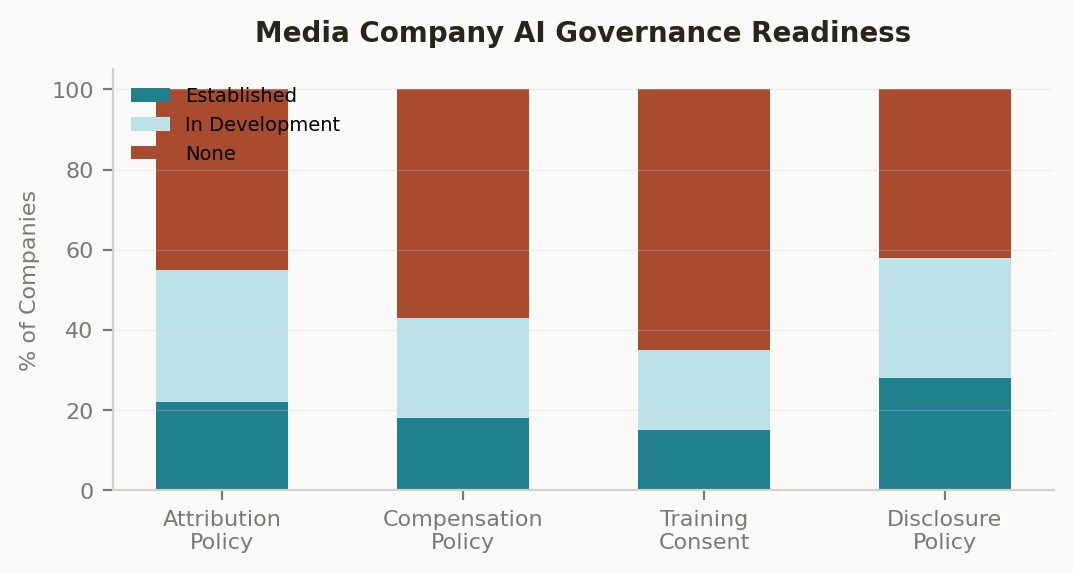
The Wrap reported that 55 percent of writers and editors at media companies using generative AI tools expressed concern about job security, and 38 percent said their compensation had been affected—either through reduced assignments, reclassification of their roles, or pressure to produce more work for the same pay. Digiday’s survey found that only 22 percent of media companies using generative tools had established clear policies on AI attribution, compensation adjustments, or consent for training models on employee-created content.
Policies for the Creative Economy
The media companies handling this transition best are establishing clear frameworks before the technology outruns the policy. This means transparent attribution policies that specify when AI is involved in content creation, compensation structures that account for the changing nature of creative work, explicit consent protocols for using employee-created content to train AI models, and investment in human creative development alongside AI tool deployment. The guilds and unions that fought for basic creative protections in the last century are now fighting for updated versions of the same principles. That fight is worth supporting, regardless of where you sit in the industry.
What This Means for You
If you are a writer or creative professional:
• Know your rights regarding AI use of your work. Push for clear attribution and compensation policies. Your ability to edit, refine, and exercise creative judgment is what separates adequate content from excellent content. Make sure your employer values that distinction.
If you are a media executive:
• Establish AI content policies before deploying tools at scale. The legal, reputational, and talent-retention costs of unclear attribution and unauthorized training on employee work are significant and growing.
If you are an audience member:
• Pay attention to how the content you consume is made. Support media organizations that disclose AI involvement and that invest in human creative talent. The quality of what you read, watch, and listen to depends on it.
REFERENCES
1. The Wrap, "AI in Hollywood Coverage" — https://www.thewrap.com/tag/artificial-intelligence/
2. WARC, "Marketing & Advertising AI Benchmarks 2025" — https://www.warc.com/search/content?q=artificial+intelligence
3. Digiday, "AI in Media and Publishing" — https://digiday.com/tag/artificial-intelligence/
Comments (0)
Join the conversation!