

AI demand forecasting has slashed stockouts and carrying costs across retail. But when the algorithm misreads the signal, it is the warehouse teams and shift workers who absorb the shock.
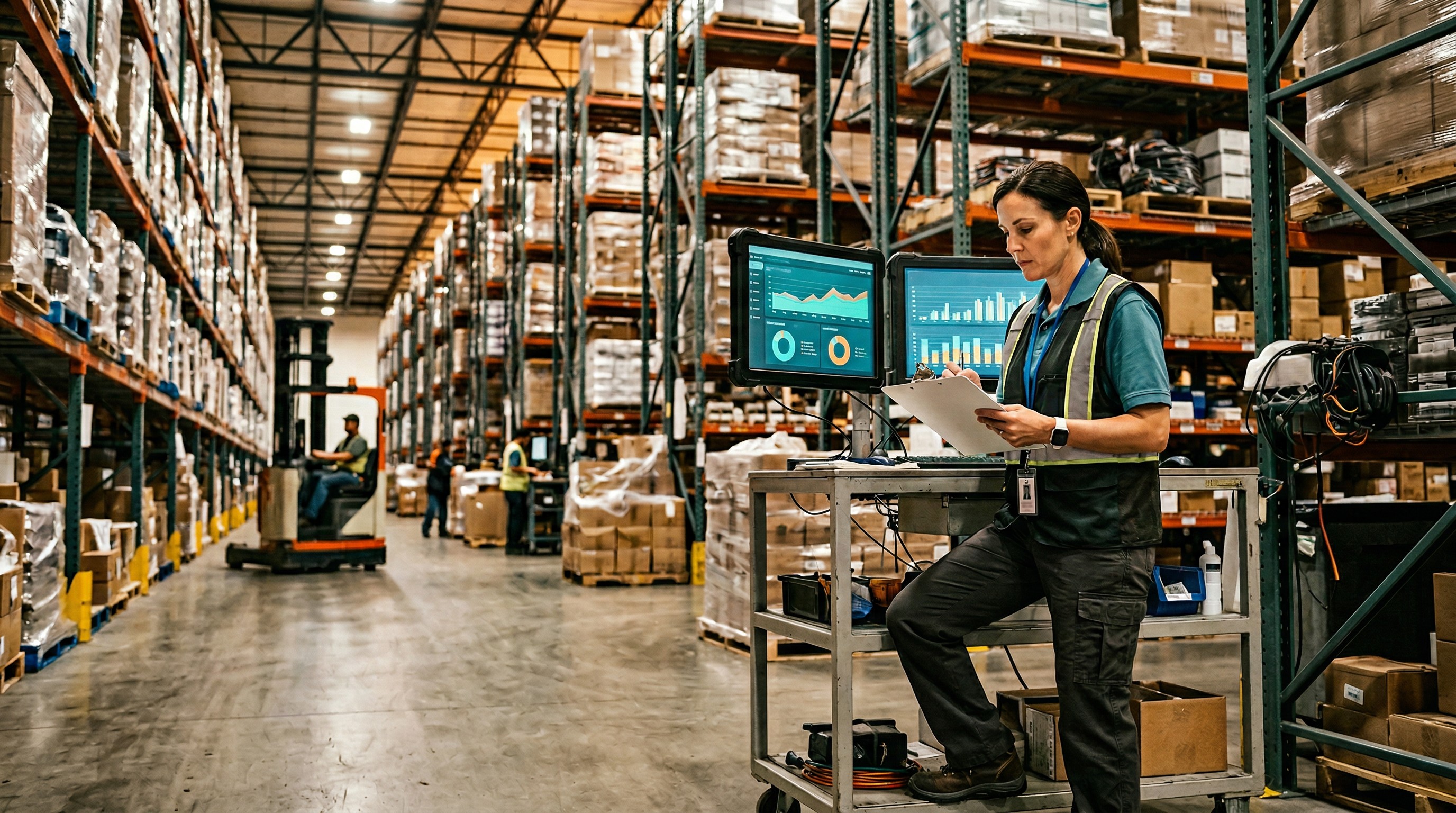
Rosa Gutierrez had worked the third shift at a regional distribution center outside Atlanta for seven years. She knew the rhythms of the warehouse—which SKUs surged before holidays, which product lines tapered after back-to-school. Then, in March, the AI-powered demand forecasting system her company had deployed six months earlier predicted a massive spike in outdoor furniture. Trucks were rerouted, overtime was mandated, and her team spent two weeks stacking patio sets that never sold. The following month, the system overcorrected: hours were cut, and Rosa lost two shifts a week for six weeks.
What the Numbers Promise
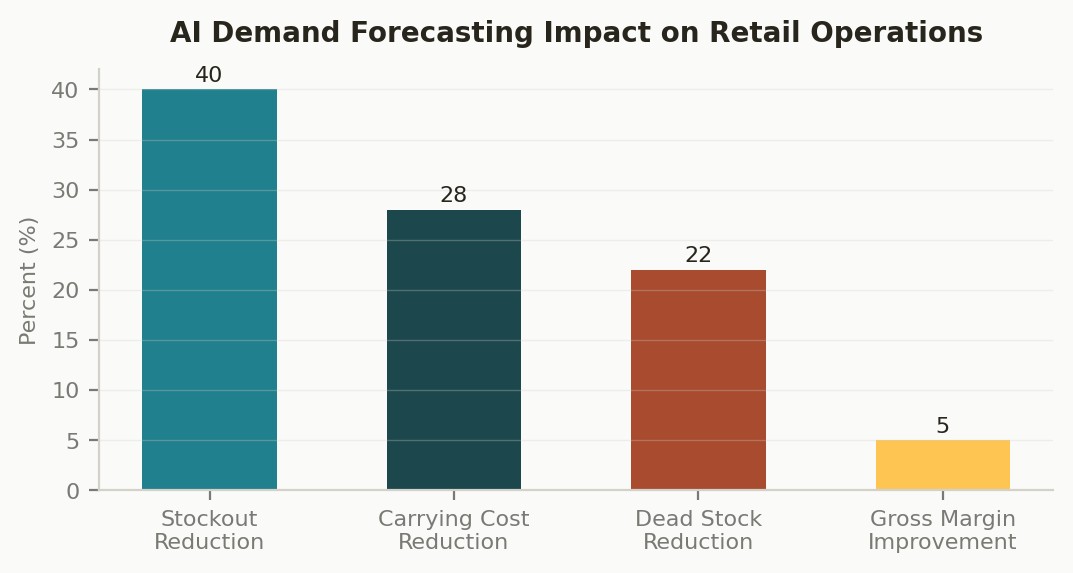
The business case for AI demand forecasting is among the strongest in retail technology. Forrester’s 2025 retail AI assessment found that mature implementations reduce stockout rates by 30 to 50 percent and cut excess inventory carrying costs by 20 to 35 percent. Gartner’s research on AI-driven personalization and supply chain tools estimates that large retailers deploying these systems see a 3 to 7 percent improvement in gross margin within the first 18 months.
Shopify’s analysis of small and mid-size merchants using AI inventory tools reported a 22 percent reduction in dead stock and a 15 percent improvement in order fill rates. Google’s retail insights team has documented how AI-informed merchandising decisions improve conversion rates by aligning online and in-store inventory with real-time consumer search behavior.
The Human Side of the Forecast
But the aggregate success metrics obscure the experience on the warehouse floor. When an AI system misjudges demand—as all forecasting systems inevitably do—the cost is not evenly distributed. Corporate absorbs the financial loss as a line item. Warehouse workers absorb it as lost hours, mandatory overtime, and schedule volatility that makes childcare, second jobs, and basic planning impossible.
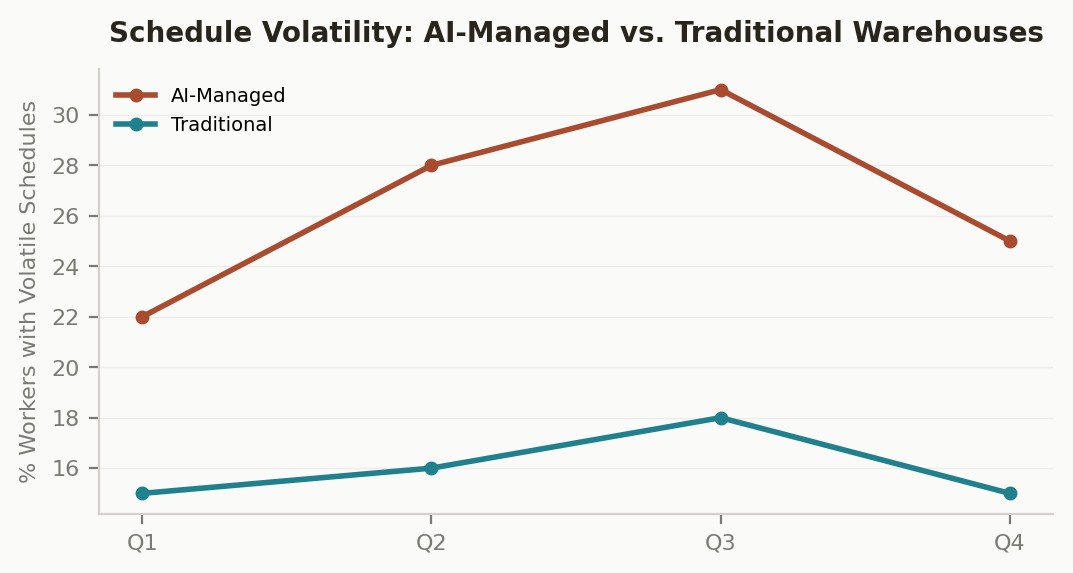
Research from the Economic Policy Institute found that schedule volatility affects 17 percent of hourly retail and logistics workers, and AI-driven demand systems have made the problem measurably worse in facilities where shift assignments are algorithmically determined. Rosa’s experience—weeks of forced overtime followed by weeks of involuntary hour cuts—is not an edge case. It is a predictable consequence of optimizing for inventory efficiency without accounting for workforce stability.
Building a Better Feedback Loop
The solution is not to abandon demand forecasting—it is too valuable. The solution is to build human input into the system. Collaborative planning, where experienced floor managers can flag when AI predictions diverge from what they see on the ground, consistently outperforms pure algorithmic forecasting. Transparent KPIs that include workforce stability metrics alongside inventory turns give leaders a more complete picture. And joint worker–management review committees ensure that the people closest to the work have a voice in how the models shape their lives.
What This Means for You
If you are a warehouse worker:
• Document how schedule changes tied to AI forecasting affect your hours and income. Bring specific examples to management or your union representative. The data that drives the algorithm should not be the only data that matters.
If you are a retail executive:
• Add workforce stability to your AI forecasting KPIs. A model that saves $2M in carrying costs but generates $1.5M in turnover and overtime is not as efficient as it appears. Build floor-level feedback loops into every demand planning cycle.
If you are a supplier:
• Negotiate for transparency in how your retail partners use AI forecasting to set order volumes. The closer you are to the data, the less likely you are to be whipsawed by algorithmic overcorrections.
REFERENCES
1. Forrester, "Retail AI Assessment 2025" — https://www.forrester.com/industry/retail
2. Gartner, "Personalization and Supply Chain Research" — https://www.gartner.com/en/marketing/topics/personalization
3. Shopify, "Business of Commerce: AI Inventory Tools" — https://www.shopify.com/blog/business
4. Think with Google, "Retail Consumer Insights" — https://www.thinkwithgoogle.com/intl/en-154/consumer-insights/consumer-trends/retail/
Comments (0)
Join the conversation!