

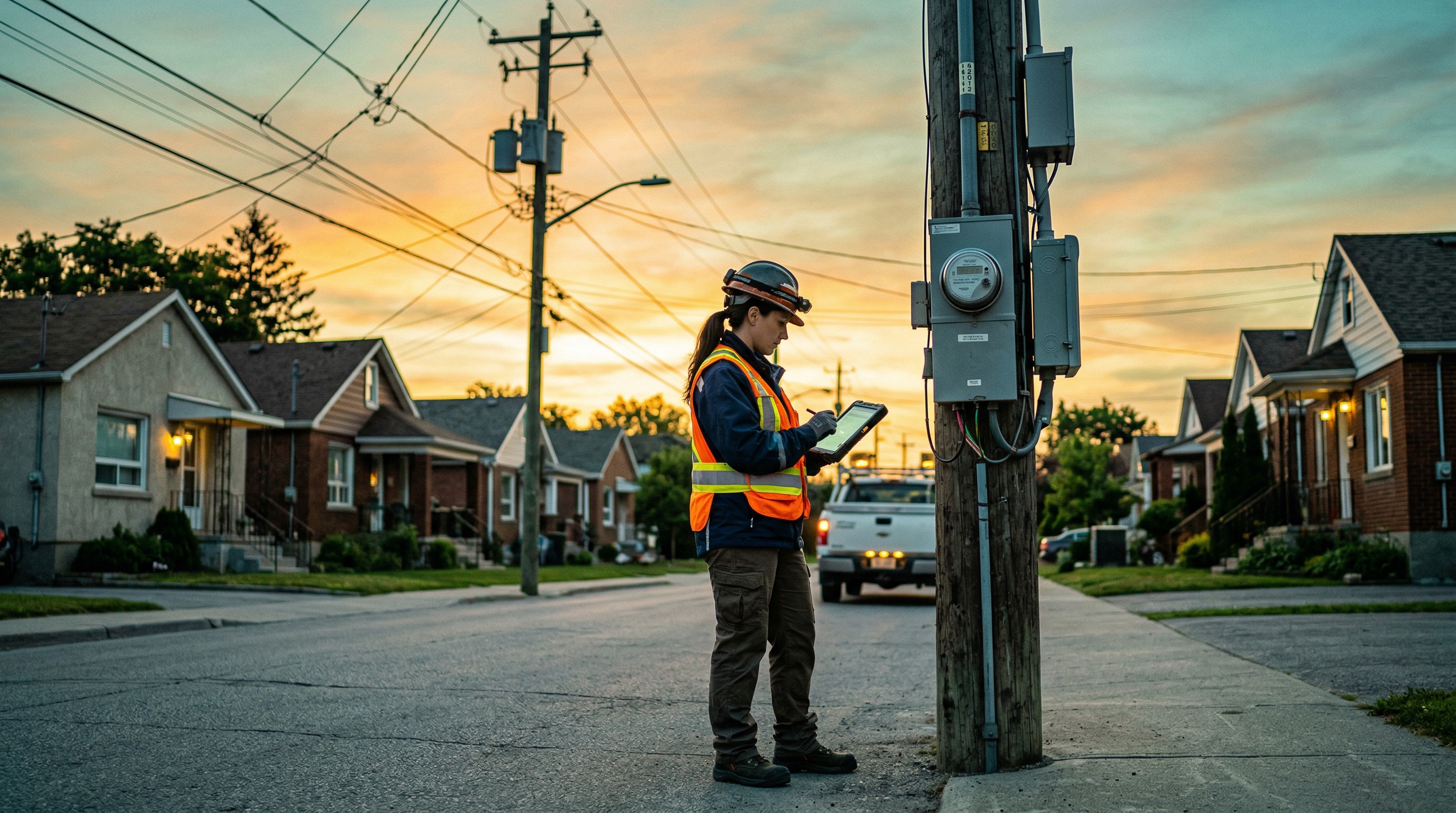
Smart meters and anomaly-detection algorithms have eliminated the traditional meter-reading route. The question is whether the workers who walked those routes will be redeployed or simply discarded.
For fourteen years, James Okafor walked the same 340 meters on a route through subdivisions and small commercial properties in central Ohio. He knew which dogs were friendly, which gates stuck, and which elderly customers would invite him in for coffee. He also knew, from years of reading dials, when a meter looked wrong—corroded connectors, evidence of tampering, or readings that did not match the house’s profile. Then, over eighteen months, smart meters replaced every analog unit on his route. James’s job did not disappear overnight. It just stopped existing gradually, one meter at a time.
The Smart Meter Transition
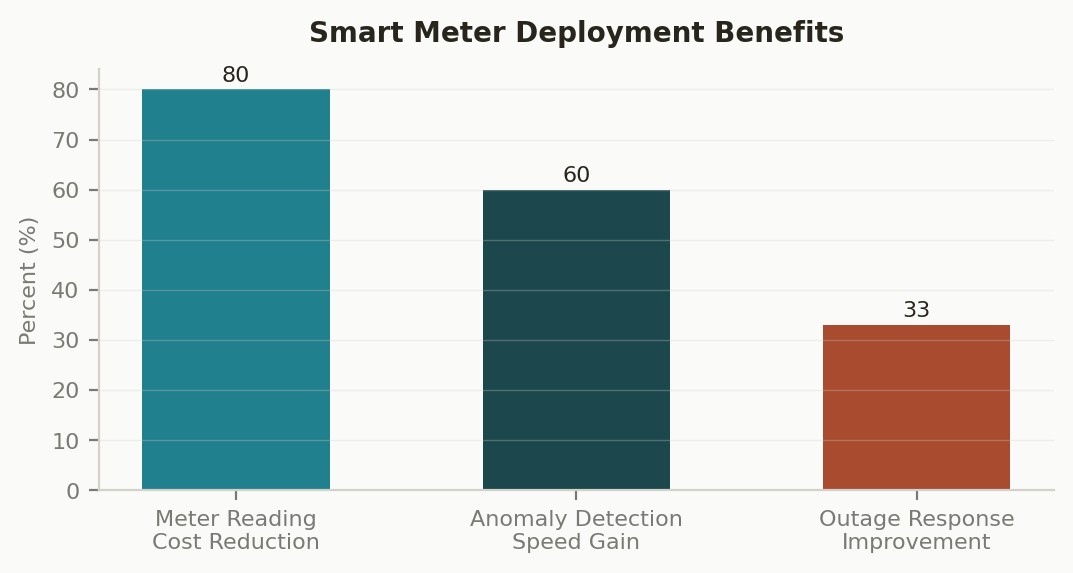
The economic case for smart meters is overwhelming. Greentech Media and Wood Mackenzie’s 2025 power analysis shows that utilities deploying advanced metering infrastructure reduce meter-reading costs by 70 to 90 percent, detect revenue-losing anomalies 60 percent faster, and improve outage response times by 25 to 40 percent. EPRI’s research documents additional benefits in voltage optimization and load balancing that save utilities $2 to $5 per customer per year in energy waste.
The International Energy Agency’s 2025 digitalisation report notes that global smart meter penetration has reached 58 percent in OECD countries, up from 35 percent five years ago. The technology is proven, the savings are documented, and the deployment is accelerating.
.The Workforce at the Crossroads
But the efficiency dividend has a human cost. An estimated 80,000 to 120,000 meter-reading jobs across the United States and Europe are being eliminated or fundamentally redesigned over the current decade. For workers like James, the transition is not just economic—it is a disruption of professional identity. These are people who took pride in a skill that required physical endurance, attention to detail, and deep community knowledge. Telling them to “learn to code” is not a transition strategy. It is an insult disguised as advice.
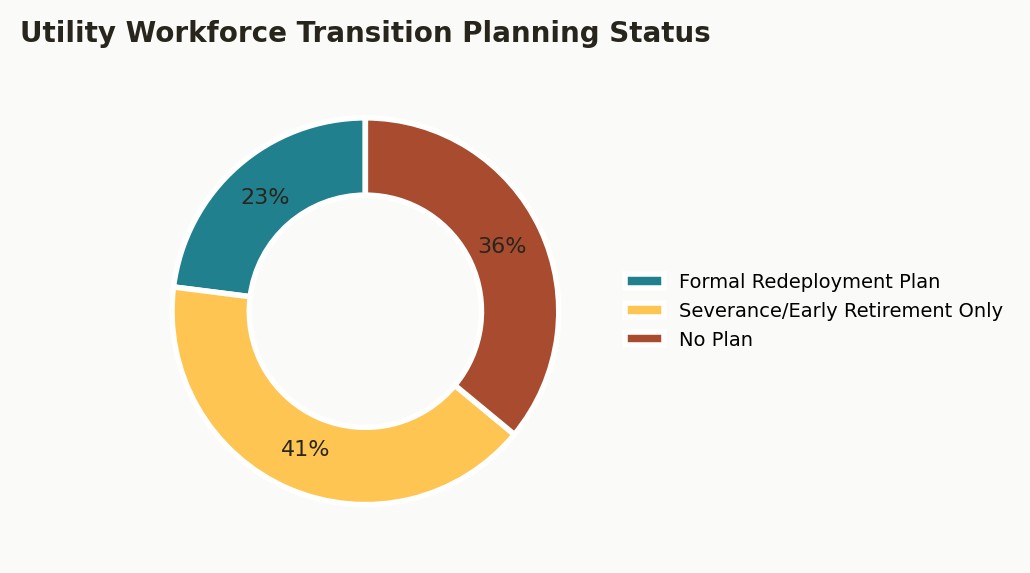
The IEA’s workforce analysis found that only 23 percent of utilities with smart meter programs have formal redeployment plans for displaced field workers. The rest offer severance, early retirement, or nothing at all.
A Practical Transition Framework
The best utilities are proving there is another path. They are redeploying meter readers into roles that leverage their field knowledge: data-informed maintenance technicians who use AI anomaly alerts but bring physical inspection skills, customer energy coaches who help households interpret smart meter data and reduce bills, and safety inspectors who audit the infrastructure that AI monitors remotely. These roles do not require four-year degrees. They require structured reskilling programs, typically 12 to 20 weeks, that treat existing expertise as a foundation rather than an obstacle.
What This Means for You
If you are a utility field worker:
• Your route knowledge and equipment familiarity are assets that no algorithm possesses. Seek out reskilling programs in data-informed maintenance or energy coaching.
If you are a utility executive:
• Treat workforce transition as a core component of your smart meter business case, not an afterthought. The cost of structured redeployment is a fraction of the cost of turnover, litigation, and community backlash.
If you are a policymaker:
• Link smart meter deployment incentives to workforce transition requirements. Decarbonization and workforce security are joint objectives—treating them as tradeoffs is a policy failure.
REFERENCES
1. Greentech Media / Wood Mackenzie, "Power & Renewables AI Analysis" — https://www.greentechmedia.com/articles/tag/artificial-intelligence
2. EPRI, "AI in Utilities: Standards and Case Studies" — https://www.epri.com/research/products/000000003002020095
3. International Energy Agency, "Digitalisation and Energy Report 2025" — https://www.iea.org/topics/digitalisation
Comments (0)
Join the conversation!