

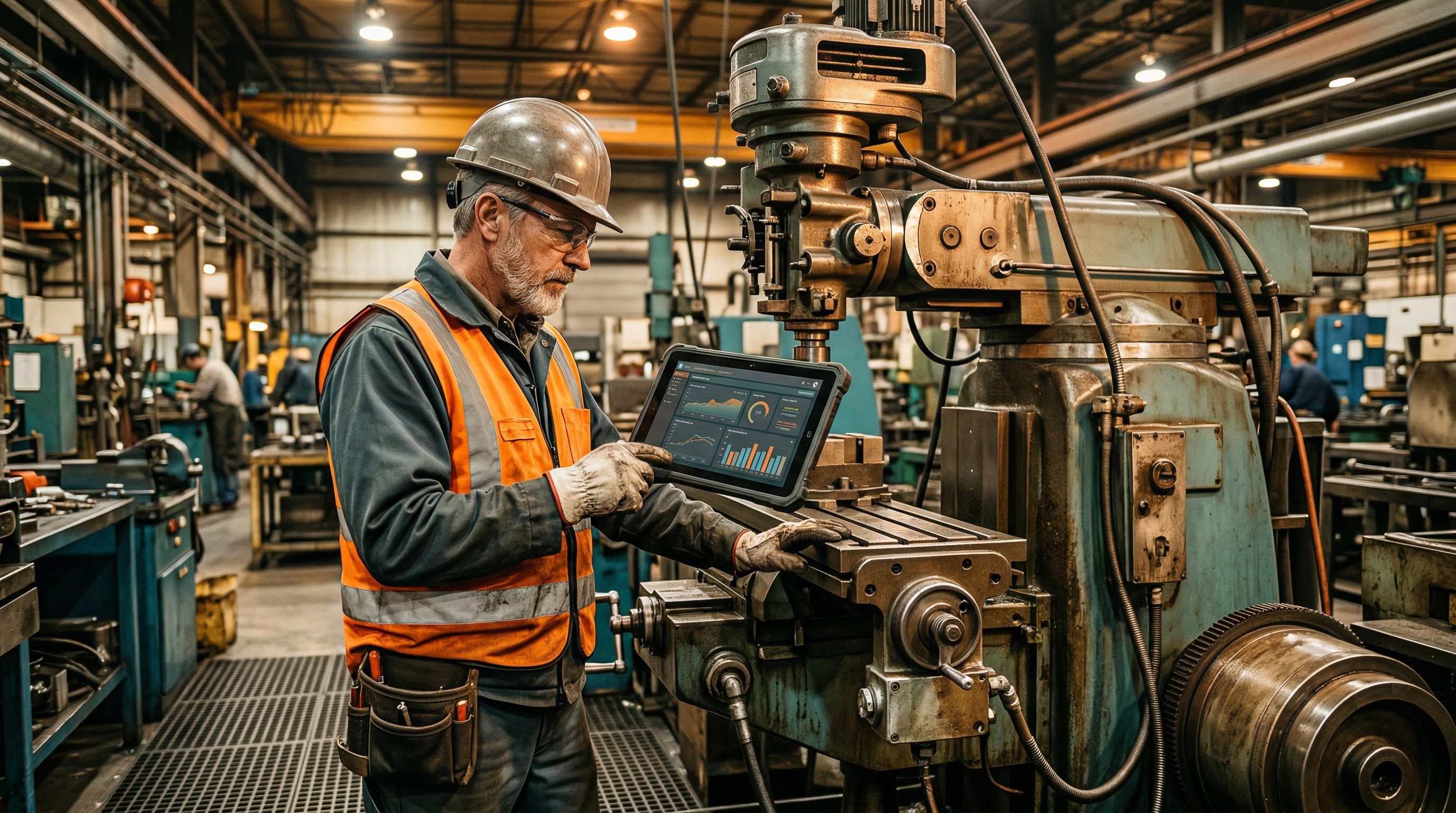
AI-powered predictive maintenance is saving manufacturers millions in downtime. But the veteran technician whose intuition built the factory is watching the screen more and the machine less.
For twenty-three years, Frank Kowalski could tell you what was wrong with a compressor by the sound it made at startup. He had a mental catalog of vibration patterns, temperature anomalies, and the subtle smell of overheating lubricant. Then his plant installed an AI-based predictive maintenance system that monitored 2,400 sensors across 180 machines. Within six months, it was catching failures three to five days before they happened. Frank’s troubleshooting instinct—the thing that made him irreplaceable—was now a backup to a dashboard.
The Downtime Dividend
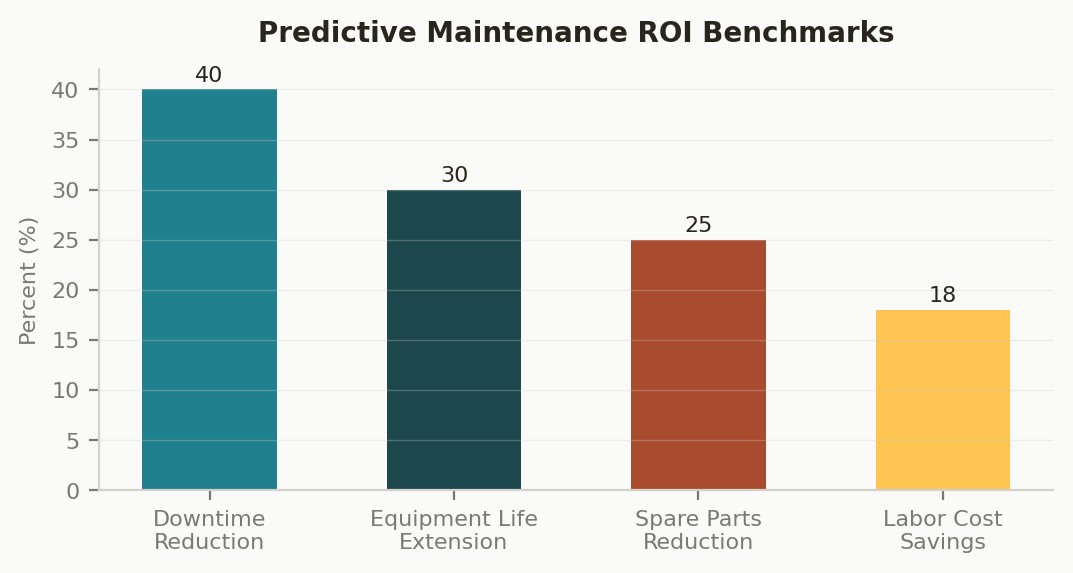
Predictive maintenance AI has produced some of the clearest ROI in industrial technology. McKinsey’s 2025 manufacturing analysis reports that mature deployments reduce unplanned downtime by 30 to 50 percent and extend equipment life by 20 to 40 percent. Boston Consulting Group’s research found that manufacturers see payback periods as short as six months, with annual savings between $50,000 and $250,000 per production line depending on complexity.
Deloitte’s Industry 4.0 assessment documents plants where AI-driven maintenance scheduling has reduced spare parts inventory by 25 percent and maintenance labor costs by 15 to 20 percent. Industry Week’s reporting from the factory floor puts it bluntly: predictive maintenance is no longer experimental. It is becoming the operational baseline for any competitive manufacturer.
The Skill Erosion Problem
But what happens to the people whose skills built the baseline? Frank’s story is playing out across thousands of plants. Technicians who spent careers developing deep mechanical intuition find their roles shifting from diagnosis to monitoring—watching dashboards instead of listening to machines. The cognitive engagement that made the work meaningful is replaced by a kind of alert-response cycle that feels more like IT support than skilled trades.
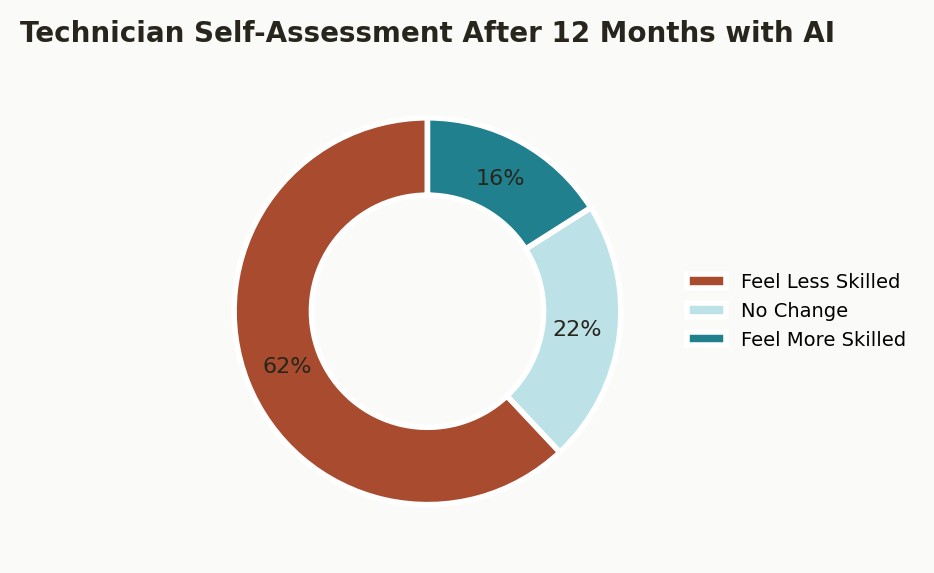
BCG’s workforce analysis found that 62 percent of maintenance technicians at plants with predictive AI systems reported feeling “less skilled” in their roles after 12 months, even as their productivity metrics improved. Industry Week interviews with plant managers reveal a consistent worry: the next generation of technicians, trained primarily on dashboards, will lack the deep equipment knowledge needed when the AI system is wrong or when novel failure modes emerge.
Reskilling That Respects Expertise
The most thoughtful manufacturers are finding a third path. Rather than replacing technicians or leaving them to monitor screens, they are creating hybrid roles—reliability engineers who combine domain expertise with data literacy. Frank, at his plant, now spends two days a week training AI models with his knowledge of failure patterns the system has never seen. His experience is becoming the training data. That is reskilling that respects expertise rather than discarding it.
What This Means for You
If you are a maintenance technician:
• Your knowledge has not become less valuable—it has become differently valuable. Pursue data literacy training, but insist that your employer recognize your domain expertise as an asset in AI model development, not just a legacy to be phased out.
If you are a plant manager:
• Design hybrid roles that pair AI monitoring with hands-on expertise. Create formal knowledge-transfer programs where experienced technicians help train predictive models. The worst outcome is a generation of operators who trust the dashboard blindly.
If you are a technology vendor:
• Build your systems to augment, not replace. Interfaces that show technicians why the AI flagged an issue—not just that it did—create better outcomes for everyone.
REFERENCES
1. McKinsey & Company, "Manufacturing AI: Predictive Maintenance ROI" — https://www.mckinsey.com/industries/advanced-electronics/our-insights
2. Deloitte, "Industry 4.0 Smart Factory Reports" — https://www.deloitte.com/global/en/issues/advanced-manufacturing.html
3. Industry Week, "AI in Manufacturing Coverage" — https://www.industryweek.com/technology-and-iiot/article/21284958/top-ai-trends-for-manufacturing
4. Boston Consulting Group, "Manufacturing Operations Insights" — https://www.bcg.com/industries/industrial-goods/operations-manufacturing
Comments (0)
Join the conversation!