

AI route optimization is saving logistics companies millions in fuel and time. But the drivers whose every turn is now dictated by an algorithm are paying a different kind of cost.
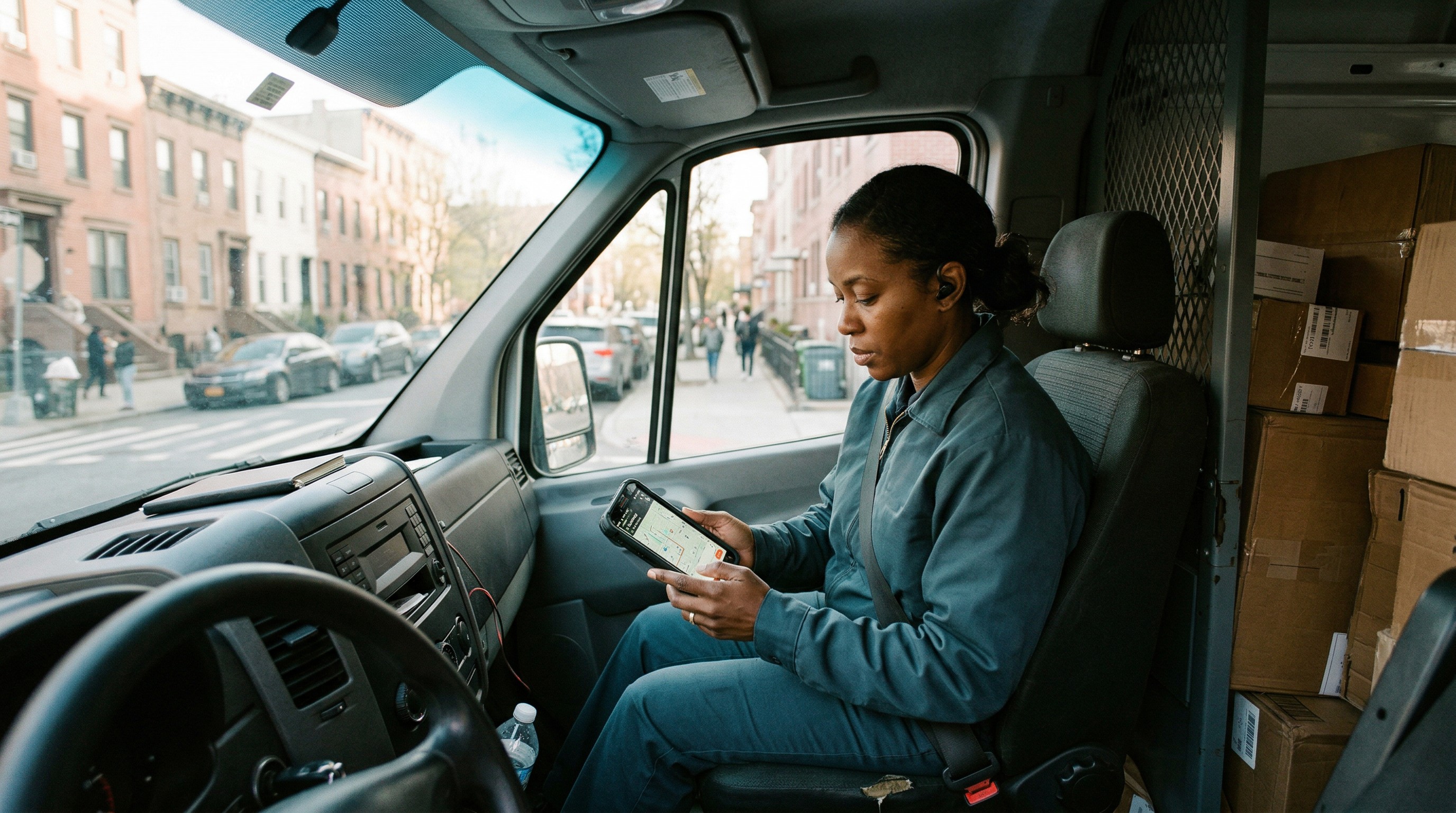
Darnell Jackson has driven a delivery route in metro Chicago for eleven years. He used to plan his own stops—clustered by neighborhood, timed to avoid school-zone congestion, paced to take his lunch break at the park on Ashland Avenue where his kids used to play. Three months ago, the company switched to an AI route optimizer. Now his handheld device tells him where to go, in what order, and how long to spend at each stop. The park on Ashland is no longer on the schedule. Neither is the discretion to take a different route when a street is flooding or a customer needs an extra minute.
The Efficiency Argument
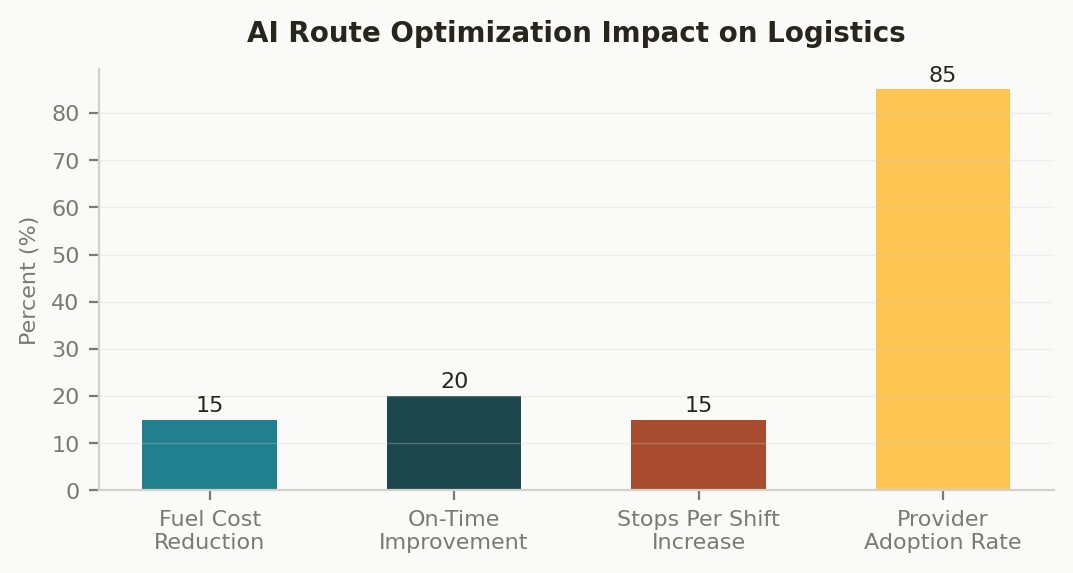
Route optimization AI has become table stakes in last-mile logistics. FreightWaves’ 2025 analysis found that AI-optimized routing reduces fuel costs by 10 to 20 percent, improves on-time delivery rates by 15 to 25 percent, and allows drivers to complete 12 to 18 percent more stops per shift. DHL’s Logistics Trend Radar estimates that the global route optimization market will exceed $12 billion by 2027.
McKinsey’s supply chain insights team calculated that a large logistics operation with 5,000 drivers can save $40 million to $80 million annually through AI-optimized routing—a figure that makes the technology economically irresistible. CSCMP’s Supply Chain Quarterly noted that adoption rates among top-50 US logistics providers now exceed 85 percent.
The Autonomy Tax
But what the numbers do not capture is the loss of professional autonomy. Darnell is a skilled driver who spent a decade learning his territory—knowledge that made him efficient, safe, and effective long before any algorithm entered the picture. Now that knowledge is irrelevant. The device tells him what to do, and deviation from the algorithm triggers an automated flag to dispatch.
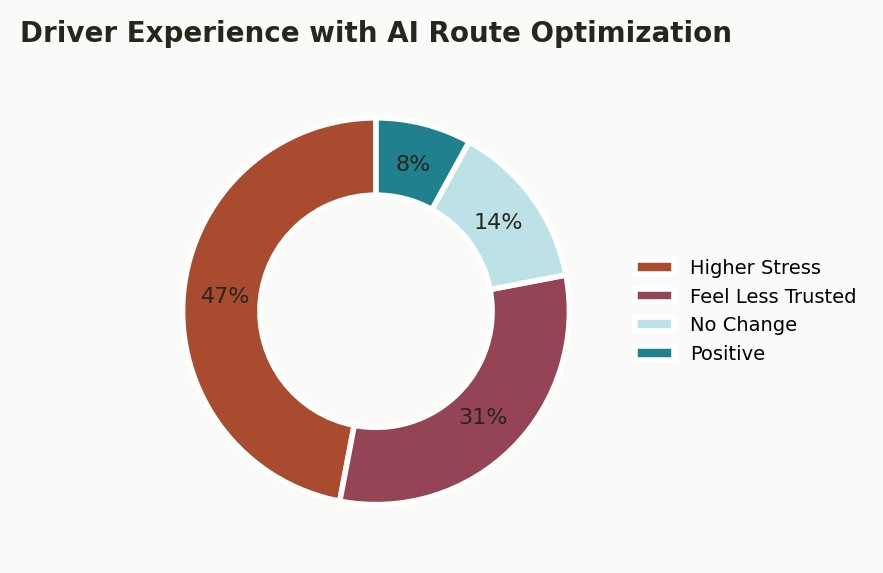
FreightWaves’ driver satisfaction surveys found that 47 percent of drivers using AI route optimization reported higher stress levels than before implementation, and 31 percent said they felt “less trusted” by their employer. The psychological cost of having every professional judgment overridden by a machine is real, even when the machine is right.
Humane Route Policies
The logistics companies that are retaining their best drivers are building human-centered policies around AI routing. This means allowing drivers to flag route suggestions that conflict with ground conditions—and having dispatch respond within minutes, not hours. It means incorporating rest and break flexibility into the algorithm’s constraints. It means creating driver feedback loops where experienced operators can improve the model based on what they see on the road. And it means measuring success by driver retention and safety alongside stops-per-shift and fuel cost.
What This Means for You
If you are a delivery driver:
• Your route knowledge is data the algorithm does not have. Provide feedback through every available channel. If no channel exists, ask your employer to create one.
If you are a logistics executive:
• Measure driver turnover alongside route efficiency. If your AI system saves $10M in fuel but increases turnover 15 percent, the net benefit is smaller than it looks. Build driver feedback into the optimization loop.
If you are a policymaker:
• Algorithmic management of delivery drivers is a labor issue that existing regulations were not designed for. Consider disclosure requirements and minimum autonomy protections for workers whose tasks are algorithmically directed.
REFERENCES
1. FreightWaves, "AI Route Optimization Benchmarks 2025" — https://www.freightwaves.com/news/artificial-intelligence
2. DHL, "Logistics Trend Radar 2025" — https://www.dhl.com/global-en/delivered/logistics/logistics-trend-radar.html
3. McKinsey & Company, "Supply Chain AI Insights" — https://www.mckinsey.com/capabilities/operations/our-insights
4. CSCMP, "Supply Chain Quarterly: AI in Logistics" — https://www.supplychainquarterly.com/
Comments (0)
Join the conversation!