

|
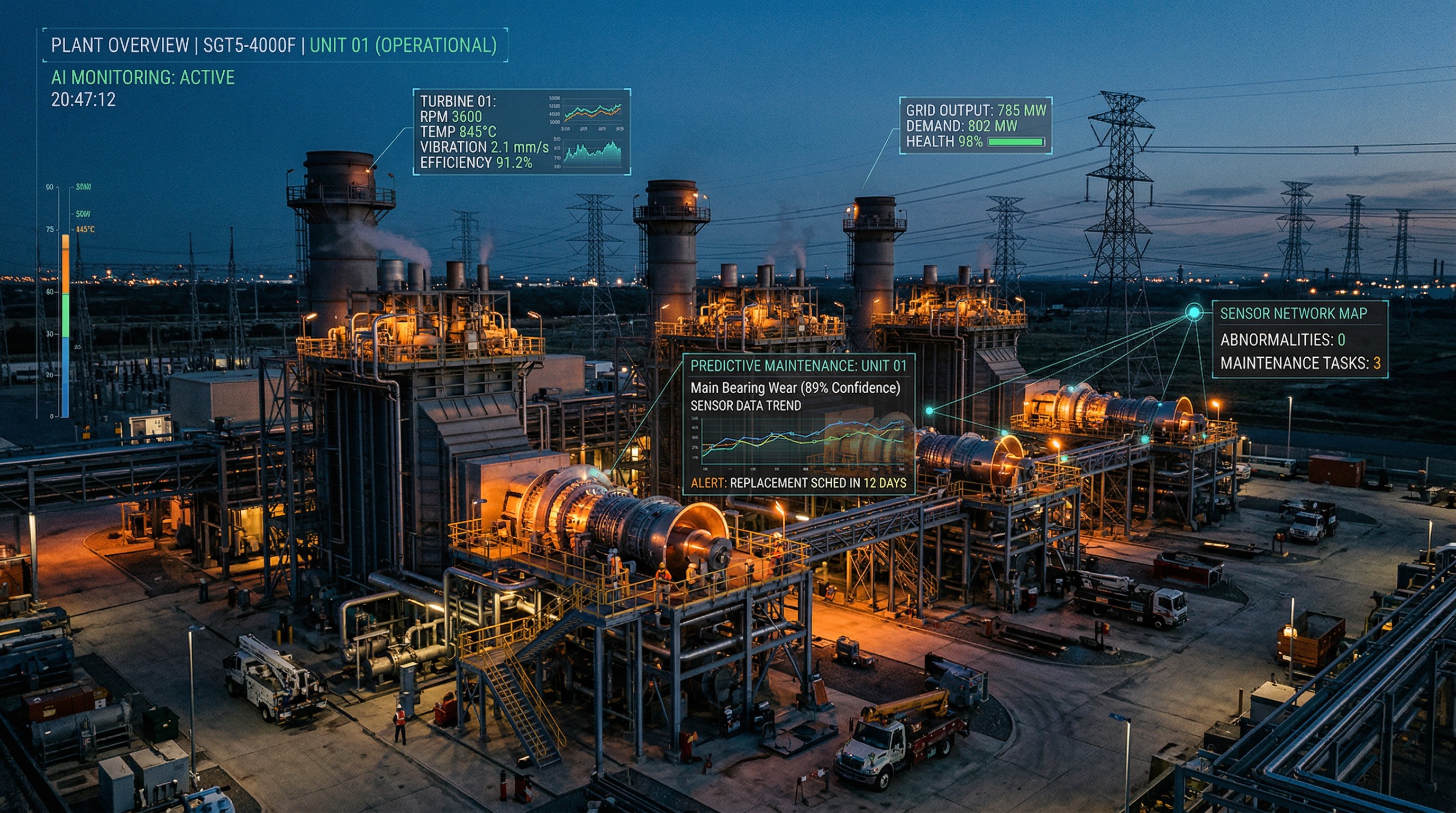
In the energy sector, a single unplanned asset failure can cost millions in forced outage penalties, emergency repair, and grid stability impacts. AI-enabled condition monitoring is changing the economics of asset management for generation and transmission operators — with payback curves that turn positive inside Year 1. |
The Asymmetry of Utility Asset Failure
A gas turbine running at 85 percent capacity factor generates enormous value every hour it is operational. The same turbine experiencing an unplanned failure during peak demand — summer in Texas, winter in the UK — can generate a financial catastrophe of a different order. Forced outage rates matter in utilities not because of the maintenance cost of the failure, but because of the capacity payment penalties, energy purchase obligations, and regulatory consequences that attach to unplanned generation curtailment.
The forced outage data across five asset classes illustrates the scale of the opportunity. Gas turbines running without AI condition monitoring experienced forced outage rates of 8.2 percent on average. Wind turbines, where mechanical stress cycles are highly variable and difficult to predict with traditional monitoring, ran at 12.4 percent. Power transformers, where failures are catastrophic and repair lead times measured in months, ran at 4.1 percent. These rates all declined by 70–76 percent after AI condition monitoring deployment — to 2.1, 3.8, and 1.0 percent respectively.
The financial translation is institution-specific, but the order of magnitude is consistent. For a utility with 2,000 MW of gas generation, each percentage point reduction in forced outage rate equates to approximately 175,000 MWh of additional annual availability. At merchant power prices of $60–80 per MWh, that is $10.5–14 million in additional revenue per percentage point. A five-point reduction in forced outage rate is a $50–70 million annual revenue recovery.
Transformers: The Highest-Stakes Asset in the Portfolio
Of all the asset classes where AI condition monitoring delivers value, power transformers present the most compelling case. A large high-voltage transformer represents $3–8 million in equipment cost, 12–24 months of procurement lead time, and — if it fails catastrophically — an environmental incident requiring site remediation. Utilities carrying aging transformer fleets with average ages above 30 years are managing tail risk that actuarial analysis consistently underprices.
AI condition monitoring for transformers focuses on dissolved gas analysis (DGA) combined with thermal imaging, partial discharge detection, and load history modelling. The combination of these signals, processed by ML models trained on failure event libraries, can identify the precursors of internal insulation degradation and incipient fault development weeks to months in advance of a failure that traditional monitoring would not catch until it was too late for scheduled intervention.
The investment payback model for a transformer monitoring program shows a Year 0 cost of approximately $3.5 million for a 50-unit transmission-class deployment, cumulative savings turning positive during Year 1 as deferred emergency repairs and avoided forced outages accumulate, and a three-year cumulative savings of $22.6 million against $7.4 million in cumulative program cost. The inflection point — where cumulative savings exceed cumulative cost — typically occurs in month 14–16 for well-instrumented transformer portfolios.
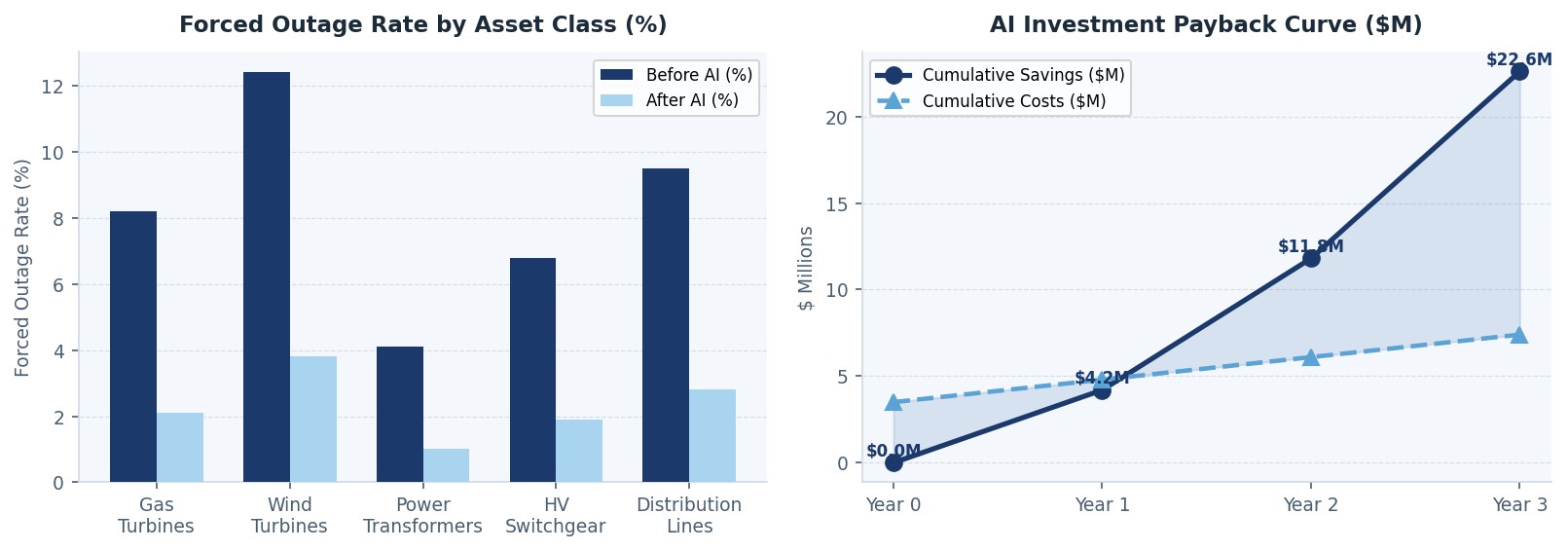
Figure 6 — Forced Outage Rate by Asset Class & AI Investment Payback Curve Over Three Years
Wind: The Complexity Challenge That AI Is Solving
Wind asset owners face a fundamentally different challenge than thermal generation operators. Wind turbines are geographically dispersed, often in remote or offshore locations where physical inspection is expensive, and subject to highly variable mechanical loads that create failure mode distributions that are difficult to model with traditional statistical approaches.
AI-based condition monitoring for wind has made the most rapid gains in gearbox and bearing failure prediction — historically the two most costly failure modes in terms of repair cost and downtime. By combining high-frequency vibration data with SCADA performance data and environmental loading models, AI systems can now predict gearbox anomalies 4–6 weeks in advance with sufficient confidence to plan scheduled interventions at the next weather window — eliminating the emergency mobilisation cost that is the primary driver of wind operations and maintenance expense.
Independent power producers with large offshore wind portfolios are reporting $450,000–900,000 per turbine per year in O&M cost reduction from comprehensive AI condition monitoring programs — driven primarily by the elimination of emergency crane mobilisation and the extension of major component replacement intervals. For a 200-turbine offshore portfolio, the annual O&M saving is in the range of $90–180 million. At those figures, the technology investment pays back in under three months.
The Regulatory Dimension
Energy regulators in the US, UK, and EU are increasingly incorporating AI-readiness standards into their asset management framework reviews. Utilities that can demonstrate AI-supported condition monitoring programs receive more favourable treatment in capital expenditure allowance determinations — because regulators recognise that proactive AI-based maintenance reduces the probability of forced outage events that impose costs on the broader grid.
This regulatory dimension adds a secondary financial benefit that rarely appears in internal AI business cases: the impact on the rate base determination and allowed return. For regulated utilities, a well-documented AI asset management program is not just an operational investment — it is a regulatory positioning asset. The CFOs who have connected this dimension to their AI program justifications have found it significantly strengthens the internal approval process.
Comments (0)
Join the conversation!